Misinterpretation of Time and Context
March 1, 2026
Radin Choobineh

Amidst the daily noise and impulsive nature of life, every event, action, and feeling sometimes feels like drama that creates a microcosm of its own in our consciousness. As individuals, we often become ignorant and caught up in the drama to ever be able to be in full control of ourselves and thoughts in the moment. Above all else we lose the peace that comes from the ability to step back and observe life objectively.
Thus, by this framing, the constant irrepressible flow of time delimits our potential of self-actualization and makes our life seem rather empty, like it’s passing by uncontrollably. Dotted by a few results or achievements here and then as context which we then correlate back to our own sense of worth and mood, creating a demoralizing bigger picture overall. Consequentially, the emptiness and the resulting inescapable focal point of different results such as dopamine or temporal attainments, determines our behaviour and decisions. Since when we view time in point of reference to outcomes and worldly attainments, we change ourselves in order to achieve what we perceive as success. However, success isn’t definitely defined in this context, what we perceive as good or bad usually is formed on the basis of whether it provided the dopamine or gratification that we wanted. Implying that the results could be as shallow as wanting validation, attention, or material things. Results which are then weighted differently in our lives and put on a pedestal, causing us to take on a detrimental mindset where we look at the future with the idea of changing our behaviour in order to seek greater outcomes such as attention.
We often assess entire days, weeks, or months as good or bad. However, units of time such as weeks and months are constructs which are only made tangible due to the superimposed context we apply to it innately. A week is defined by an upcoming test or interview, a day is defined by social interactions; concrete results that allow us to reflect on time through the lens of results.
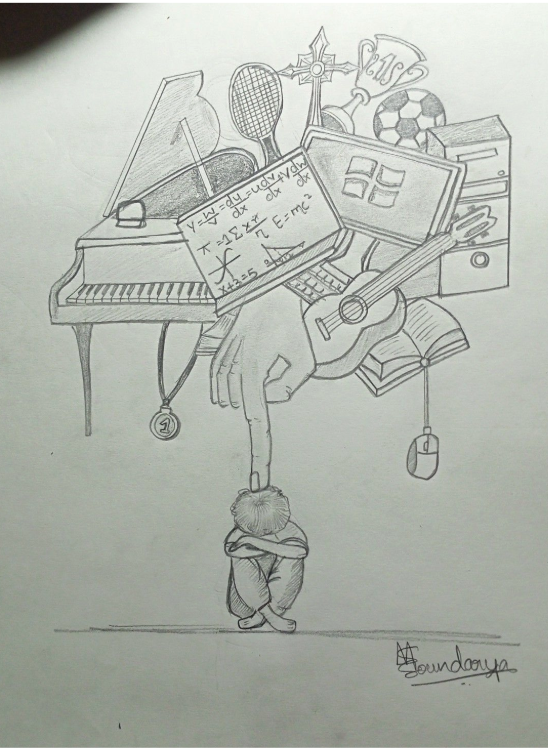
Going through the motions of life and seeing how time flies by can be demoralizing as you stay stuck in a cycle of exchanging your time for results. It's a blinding mindset; it makes you think that you're losing a race, that you're aging, it makes you obsessed with time and the fact that it is along with your life, running out, leaving you feeling rushed and impulsive. But there is no race, it's just you right now in the moment and you're fleeting thoughts. In the end, results do not determine who you are; you are defined by your understanding, your ideas, your personality, and how you approach each moment, factors which build up on each other over time, and through consistent effort. You can’t try to cling on to results as a means of defining or justifying your self worth, whether in the past, present, or future. Framing results as a measure of worth is an inaccurate depiction, no matter how many titles or achievements you accomplish, you are only defined by who you are in the present moment.
Therefore, realistically, time can only be defined to our current state of mind, the current moment, our thoughts right now. Our current thoughts are who we are and we only have control over how we approach the present moment, otherwise, the future and past are just conceptual ideas / constructs stored in our head. Fleeting thoughts and our current state of mind exemplify the emptiness of different quick gratifications and labels that we put on a pedestal when we are alone. Having a rich sense of self and direction allows you to constantly have a flowing sense of self that allows each second that passes by to be experienced more intensely, whereas a disconnection with the moment causes time to feel empty and as mentioned before, like a race.
Understanding the bigger picture that only the present is relevant, everything else being ideas existing within the present, irrational fears and worries about the future and past can be put aside. Rather than being fully and blindly, submerged into the drama of life, anything you want to do and care about you will be able to do something about now and that creates your current state of being. Moreover, being aware in the moment allows you to have control over how coherent you are with yourself, your capacity to inhibit bad habits of thoughts or behaviours, or push yourself to do what you actually want. Additionally, as a result, consistent presence in the moment allows for becoming less prone to escapism and more understanding and recognizant of the weight of daily stresses, freeing you and allowing you to act more responsibly and maturely in the long term. Escapism can be effectively replaced with gratitude and appreciation of the simple aspects of life and the graces of the present, giving us the humility to have a sense of awe and proactive curiosity in our daily lives, converse to the rushed, ignorant picture of daily life presented in the beginning.